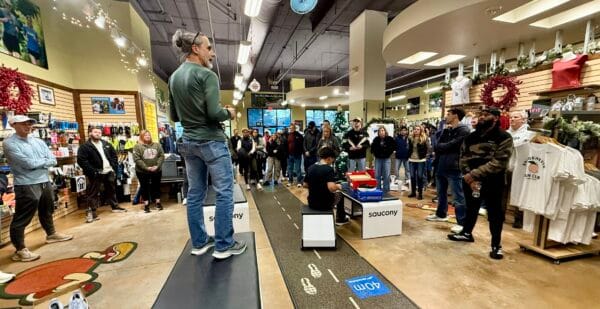
“Companionship; in close association”
This is my preferred definition of “together.” I like this definition so much that this term is the name of an occasion my business hosts each year. Our TOGETHER Summit gathers the Leadership Team at Big Peach with our most regarded and highest volume supplier partners. Brands like Nike, Asics, Brooks, HOKA, On, New Balance and an important handful of others convene for two days to evaluate results, exchange status reports, make plans and update our shared future. As it concluded less than 48 hours ago, I’m now cataloguing the best ideas, with our Team already acting on some of the promised next steps. To be sure, we were literally “in close association” for every moment of the included activities. Even more importantly, we now transition to a figurative interpretation of this definition. Said differently, personal and commercial companionship carries on! And it is full of work integral to the aspirations our business holds and the achievement of our potential.
It’s True: We Both Need Each Other
Decades ago, I was in a role at The Coca-Cola Company that was effectively National Accounts. And though far from universal, the way some retailers treated suppliers was (to put it mildly) alarming. The treatment included illogical demands and unrealistic expectations; it was accompanied by classless behavior and baseless superiority. Like when we were teenagers and frustrated with a parent (and as our own kids think silently to themselves now…), I thought, “If I’m ever a retailer, I’m going to approach these relationships differently.”
In both retailing and parenting, this is smart, evolutionary thinking. In fact, when I was a new retailer finally able to put this mindset into motion, I’m not sure I had another choice… I needed authorized reseller agreements from very specific suppliers for access to the most popular products. Moreover, my big ideas for an underserved market were not equal to the insight critical for execution. Validated experience should be especially matterful to the inexperienced.
Private-Label Proliferation
Still, when I started my business in 2004, most suppliers only supplied.
Of course, that is a gross simplification. Without question, vendor representatives were also customer-facing, as they performed business development and engaged in marketing and advertising efforts to improve sales in their accounts. But they were rarely given credit beyond supplying the goods pervasively found on retailer shelves. And the stability found in this longstanding model only contributed to the objectionable behavior referenced earlier. It was high-level retail employees in various channels acting out their misbelief that “you need us more than we need you.”
The emergence and growth of private-label products only furthered this prevailing mindset. Believe it or not, there was a day when household names like Kirkland, Great Value, Big K and Complete Home – arguably brands in their own right – were inconceivable. More specifically, they were literally unable to be conceived. Retailers did not have a supply chain or pipeline for these products; they certainly did not have in-house packaging or brand-building expertise to steer the ship through the always choppy waters of consumer behavior and preference.
But once this private-label approach was more fully seeded – and regularly succeeded – there was no turning back. Private-label proliferation was rampant. And its popularization intensified common thinking associated with retailer supremacy over its suppliers. For vendors, their wholesale network quickly became a roster of both customers and competitors. Today, almost every category has prominent private label products and brands. Way beyond grocery and mass merchants, it is beauty supply, pet care, pharmacy and home and garden retailers that tout and sensibly put their private-label products in front. In North America and Europe, some of the largest retailers regularly report more than half of their sales from such products. In the greatest of ironies, these initially enraged manufacturers now often produce the very products that compete with their own national brand(s), as the additional revenue and opportunities for scale and efficiency are too great to pass up. It’s a classic reflection of, “If you can’t beat ‘em, join ‘em.”

The Circle is Now Complete
A modest level of purchasing power furnishes my business with attractive private-label prospects for apparel and accessories. But the largest volume category for us – Performance Running Footwear – does not currently have a feasible option for such introductions. There is no way to supplant or complement the footwear volume connected to the recognizable brands attending our conference. To be sure, we are comfortable with this reality. And private-label expansion remains an accepted dead-end road for highly visible products in many other categories, too.
But let’s go further. It is also no secret that an attractive means of increased revenue for most manufacturers has arrived. To be sure, the brand name on many commonly used products is also the name of an organization that can now perform fundamental retail responsibilities. For most product categories participating in direct-to-consumer today, this manifestation is mostly evident online – but it is also increasingly with brick-and-mortar locations and local market showrooms. Even if only internationally, most brands found on our footwear wall have more physical stores than we do.
To be concise, we’ve definitively come full circle: Regardless of the degree, sellers are producing… and producers are selling.
But make no mistake: it’s not always pretty. Even with private-label momentum, bankruptcy courts and trade media have shown that unfounded and unwise lordship by retailers over their supplier network can lead to expedient demise… When in arrears with accounts payable, likeability matters. And, for sure, it goes both ways. In the absence of perceived dependence on retailers, some manufacturers are rolling up accounts, tightening wholesale terms and prioritizing opportunities associated with direct-to-consumer business… But whether simplistic or strategic, this route doesn’t always lead to greener pastures for manufacturers. In plain view this year, Nike has thoughtfully walked back not-so-aged declarations connected to its plan for “Consumer Direct Acceleration.”
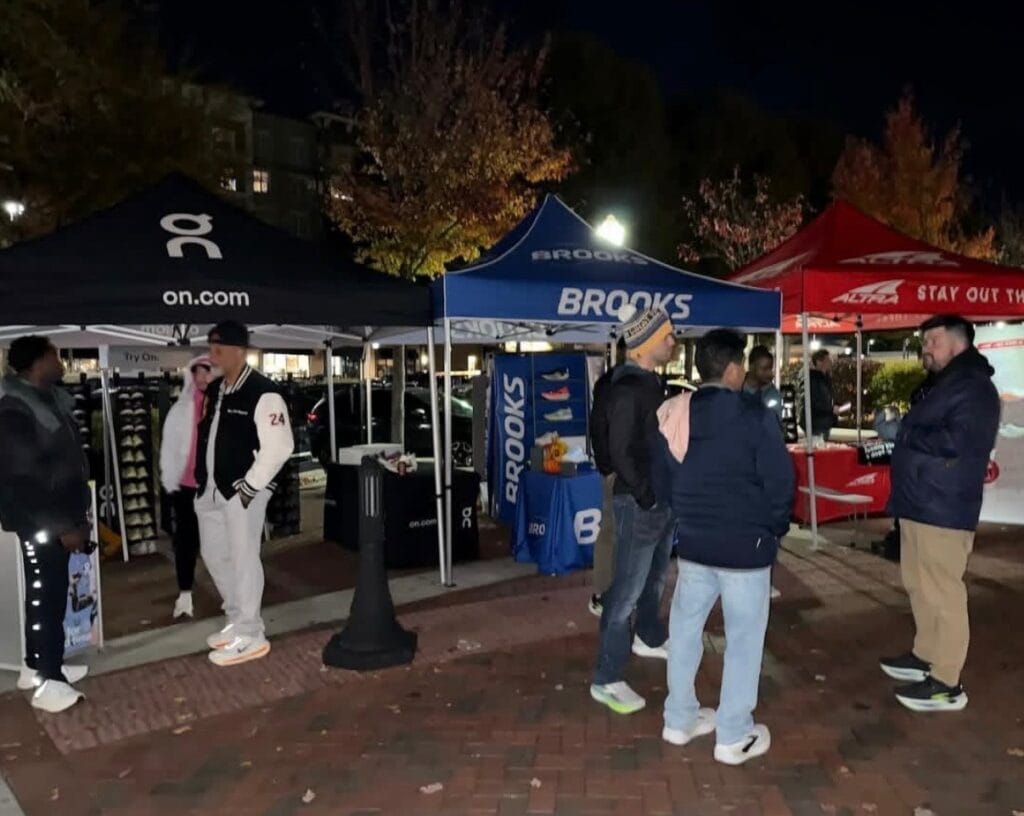
The Importance of Partnership Appears Perpetual
I am a proud retailer – but I am not blind to the advantages D2C. At the same time, I do not believe it will be enough for even the best producers to win outright. The same is true with private label products. They’re not enough. As consumers and captains of destiny, we’ve now seen both impressive private label possibilities and direct-to-consumer capabilities. Neither advent has rendered the retailer or the brand-name manufacturer irrelevant to the other.
In my book, It’s Not the Bricks, It’s the Mortar: Optimize Your Retail Business for Lasting Success, I suggest, “the best partnerships are realized when there is a recognized overlap of self-interests by two or more entities.” As the curtains fell at this year’s TOGETHER Summit, it was obvious this was as true as ever. In many industries, it seems the detours necessary for retailers and manufacturers to navigate the fogginess associated with COVID-19, shipping disruptions and tariff-impacted pricing could also prove to be pathways diverting both from insular ambition and routing them to the same intersection…
Said differently, the future of commerce continues to favor those that go “in close association.”
Build it strong TOGETHER, y’all!
This article was originally shared as a LinkedIn post. Join the conversation on LinkedIn.
Explore more insights in It’s Not the Bricks, It’s the Mortar.
Subscribe to The Monthly Mortar newsletter for leadership strategies delivered straight to your inbox.